
Toddler Program
Philosophy & Structure
Montessori is an educational method that focuses on the individual child and his or her needs. The concepts behind this method were consolidated by Dr. Maria Montessori at the beginning of the 20th century. Her observations of young children led to an understanding that the first three years of life are a critical period of development where children absorb information from their environment and begin to form independence, coordination, and language.
Our Toddler Program is designed for children ages 18 months to 36 months and offers a curriculum that emerges from each child’s unique skills and interests. Based on daily observation, guides introduce materials and activities that support development and stimulate learning. During this stage, children are encouraged to gain independence, build confidence, and develop a sense of order in their environment.
The classroom is carefully prepared with low shelves, child-sized furniture, and developmentally appropriate materials that allow children to move freely and make choices within clear limits. The environment supports the child’s natural desire to do things independently while learning to respect boundaries, care for materials, and participate in a community.
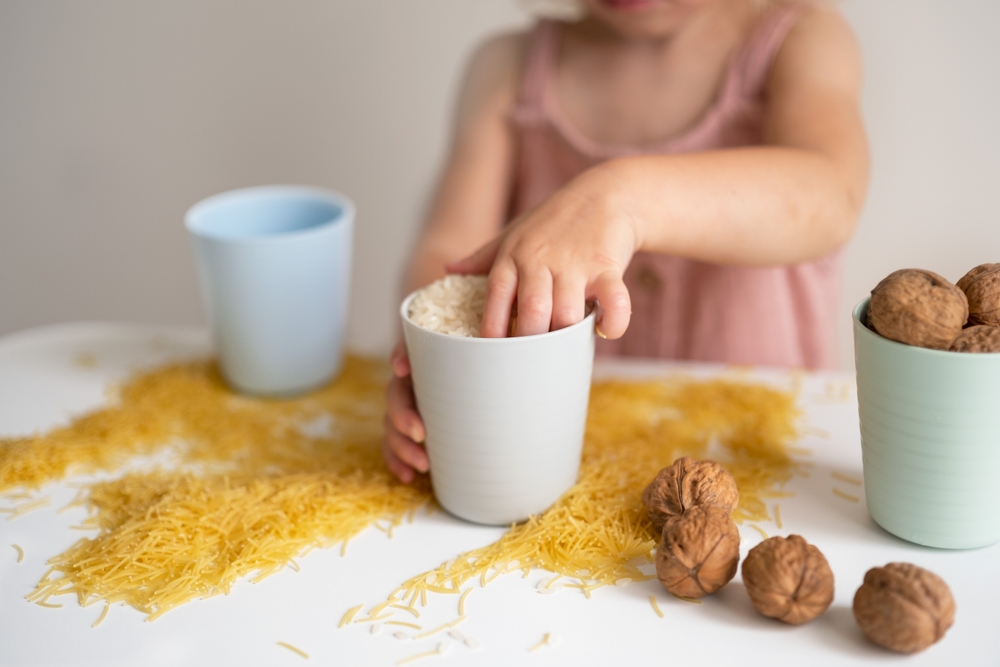
The routines of everyday living form the foundation of the toddler classroom. Through consistent daily activities, children develop independence, coordination, concentration, and social awareness. Toilet learning is also a part of the classroom experience, where we follow each child’s readiness and support their growing independence in self-care.
Peer to Peer Learning
What is a typical morning like in a Montessori Toddler Program classroom?
Curriculum
Practical Life
In this area, the child engages in activities that reflect everyday life. These include washing, dressing, toileting, food preparation, and cleaning. Children also participate in caring for their environment through activities such as sweeping, plant care, and food service. These exercises help develop independence, coordination, concentration, and a sense of responsibility.
Sensorial
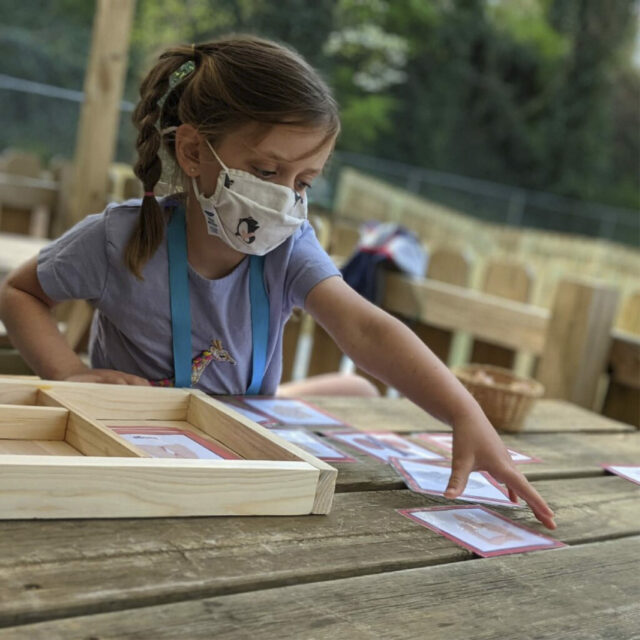
Sensorial materials allow the child to explore and refine their senses. Through activities that involve sorting and identifying differences in size, shape, color, and texture, the child begins to organize their understanding of the world and develop visual discrimination and early problem-solving skills.
Language
Language development is supported through conversation, naming objects, describing actions, music, and stories. The classroom is language-rich, with adults using clear and precise vocabulary. Children are encouraged to communicate with adults and peers, building both receptive and expressive language skills.
Fine Motor & Problem Solving
Children develop fine motor control and coordination through activities such as grasping, transferring objects, using simple tools, puzzles, stacking, and artwork. These materials also support concentration and problem-solving abilities.
Large Motor Development
The toddler environment includes opportunities for movement both indoors and outdoors. Activities such as walking, climbing, running, balancing, and navigating steps help children develop coordination, strength, and confidence in their physical abilities.
Practical Tools & Materials
Materials in the toddler classroom are designed to be purposeful and developmentally appropriate. Children use real, child-sized tools such as small brooms, utensils, and dressing materials. Items are typically made from natural materials such as wood, metal, and cloth, providing meaningful and realistic learning experiences.
Philosophy & Structure
Montessori is an educational method that focuses on the individual child and his or her needs. The concepts behind this method were consolidated by Dr. Maria Montessori in the beginning of the 20th century. Her concepts in regards to teaching children based on their needs and personal interest led to the Montessori educational method that we use today. We begin students on their Montessori journey starting in early childhood and help them to gain a sense of independence, grow confidence, and develop a love of learning.
Each of our early childhood classrooms contains a robust curriculum including botany, zoology, experimental science, art and music (composition, theory, and appreciation), geography, history, sensorial materials, mathematics, language, and practical life. Our toddler and early childhood classrooms are located at our Garden Campus.
Each early childhood classroom contains a robust curriculum including botany, zoology, experimental science, art and music (composition, theory, and appreciation), geography, history, sensorial materials, mathematics, language, and practical life.
Peer to Peer Learning
What is a typical morning like in a Montessori Early Childhood (3-6) classroom?
Curriculum
Practical Life
In this section of work, the child finds materials and exercises of their everyday life from pouring water from a jug to a glass or learning how to tie a shoelace. These activities help the child to properly take care of themselves so that they may feel independent and not have to rely on an adult for all of their basic needs which instill self-esteem.
Sensorial
Activities in this section allow the child to refine each of their senses. They will become a child who can appreciate color and texture differences, organize thoughts and objects in their environment and develop a refined sense of pitch from the music they may hear around them.
Language
The child is taught language through a specific progression of lessons where they first become aware of the different sounds in a word. The child then learns the language phonetically until the point where they are taught the different “rules” in a given language and the exceptions to those rules that they will need to know in order to spell and read fluently.
Mathematics
The child first learns to count from 1-10 through the understanding of the concept that numbers represent a specific amount. Through each material, the child will learn addition, subtraction, multiplication, and division to truly understand what each one means in their deeper sense. Through this method of teaching, Montessori offers the child a strong and solid foundation in the understanding of mathematical theory and application.
Why Montessori?
Overall, what makes this method of learning so different compared to other conventional forms of early childhood education today? Our teachers do not stand in front of the class and teach each child the same lesson all at once. Each child is allowed to learn at their own rhythm in a way that allows them to feel as though they are not learning or being taught, but discovering the world. Even young children gain a sense of independence, curiosity, and esteem that is only accomplished through Dr. Montessori’s methodology with Little River. By starting Montessori Education at the beginning of a child’s academic journey, guardians can set their child up for success in many facets of their lives.